
.svg)

TL;DR: the best AI SDR tools by use case
- The AI SDR category covers two distinct tool types in 2026: outbound (prospecting and cold outreach at scale) and inbound (qualifying website visitors in real time). Before evaluating any specific tool, figure out which problem you are actually trying to solve.
- Best for inbound qualification: RepX by Storylane qualifies visitors and demos the product in the same session, a capability not found in other inbound tools we reviewed.
- Best for outbound prospecting: AiSDR, Salesforge, Artisan, and 11x.ai each have genuine strengths for different outbound motions.
- Best for data and enrichment: Clay and Apollo.io are the tools that power the AI SDR workflow before outbound sequences run.
There is a useful version of the AI SDR software category and a confusing one. The confusing version treats all these tools as roughly interchangeable, differing only in price and feature count. The useful version recognizes that tools built to find new prospects through cold outreach and tools built to qualify visitors already at your website are solving genuinely different problems, and require genuinely different architectures to solve them.
The eight tools in this roundup are organized by which problem they were built for. Most "best AI SDR tools 2026" lists lump everything together. I’ve made sure that this one does not. (Nine tools total, up from our original eight, after adding 1Mind to the inbound category.) Wherever possible, I’ve tried out the product to share my two cents on the experience (all opinions are personal).
This list is updated for Q2 2026. Some AI SDR platforms that were early stages a year ago have matured meaningfully. A few others have stagnated. The distinctions matter more now than they did when the category was newer. For a broader look at the G2 AI SDRs category, their rankings track closely with the patterns we see below.
Why the right AI SDR tool depends on where your pipeline is breaking
There is a diagnostic question worth asking before any AI sales agent evaluation: is your problem that you need more conversations with new prospects, or is it that you are not converting the demand that is already arriving at your website?
If your pipeline is thin because you are not generating enough top-of-funnel activity, outbound AI SDR tools are the right category. These automate the research, personalization, and sequencing that SDRs do to build cold pipeline from target account lists.
If you have meaningful website traffic and it is not converting into qualified pipeline, the inbound AI SDR category is more relevant. These tools engage visitors in real time, answer product questions, surface product demos, and qualify intent without requiring a form fill or a calendar invitation. This is what intent-based marketing looks like in practice: capturing buying signals from visitors who are already on your site.
Both types exist in the market. The eight tools below are organized by type so the comparison is actually useful.
AI SDR tools comparison: the 8 best platforms for B2B teams in 2026
| Tool | Type | G2 rating | Starting price | Best for |
|---|---|---|---|---|
| RepX (Storylane) | Inbound | 4.8 stars (1,405 reviews) | $2,000/mo | Inbound qualification and demo for website visitors |
| 1Mind (Mindy) | Inbound | 4.9 stars (<10 reviews) | Custom (six-figure/yr) | Enterprise video-native inbound with lifelike AI persona |
| Qualified (Piper) | Inbound | 4.9 stars (1,400+ reviews) | ~$42K/yr | Enterprise Salesforce-native inbound conversion |
| AiSDR | Outbound | 4.7 stars (76 reviews) | $900/mo | Multichannel outbound with transparent pricing |
| Salesforge (Frank) | Outbound | 4.6 stars (85 reviews) | $599/mo | Outbound email deliverability |
| Artisan (Ava) | Outbound | 3.9 stars (22 reviews) | ~$2K+/mo | All-in-one outbound with built-in prospect database |
| 11x.ai (Alice) | Outbound | 4.4 stars (27 reviews) | ~$5K+/mo | Enterprise multichannel outbound with voice |
| Clay | Data + enrichment | 4.9 stars (300+ reviews) | Free / $149+/mo | Building enriched, AI-researched prospect lists |
| Apollo.io | Data + outreach | 4.8 stars (7,000+ reviews) | Free / $49+/mo | Combined data, sequencing, and outreach in one platform |
G2 ratings as of Q2 2026. Pricing reflects publicly available information and may vary by contract terms.
G2 ratings as of Q2 2026. Pricing reflects publicly available information and may vary by contract terms.
Inbound AI SDR tools
1. RepX by Storylane: best inbound AI SDR tool for demo-led qualification
RepX turns your website visitors into qualified pipeline without requiring a form fill, a calendar invite, or a human SDR in the loop. It is Storylane's inbound AI SDR: a voice and video agent that engages visitors in real time and qualifies them mid-demo.
What sets RepX apart from other inbound platforms in this roundup is demo-nativity. When a visitor asks a product question, RepX does not respond with a generic chat message or a link to a help article. It surfaces the relevant Storylane interactive demo and walks the visitor through it mid-conversation. You get qualification and product demonstration in the same session, something none of the other tools on this list offer (verified across G2 feature comparisons in the AI SDRs category).
RepX is trained on your product documentation, website content, and sales call transcripts. When the conversation signals genuine fit, it routes the visitor to a calendar booking or self-serve signup and pushes the full conversation context to your CRM. Your rep follows up with a complete picture of what the visitor asked, which demo they watched, and where interest peaked.
One B2B SaaS team using RepX reported that their website-to-meeting conversion rate increased by 40% in the first 60 days, primarily because buyers could self-qualify through a demo before committing to a sales call.
Deployment typically takes under a week. Pricing starts at $1,500/mo.
Honest tradeoff: RepX is purpose-built for inbound. If your bottleneck is generating new cold pipeline from prospect lists, this is not the tool for that job.
Best for: B2B SaaS teams whose buyers want deep product understanding before committing to a full sales conversation. See how it works on the RepX AI Sales Agent product page, or compare it with other sales demo tools in a broader context.
2. Qualified (Piper): best for Salesforce-native enterprise inbound
If your team runs Salesforce and needs every inbound interaction enriched with deal history and account signals, Qualified's Piper is built for that workflow. With 4.9 stars across 1,400+ G2 reviews, it is the dominant inbound AI SDR for enterprise Salesforce environments. Real-time account signals, deal history, and CRM data feed into how Piper qualifies and engages each visitor. If a prospect is already in an active Salesforce opportunity, Piper knows it and adjusts the conversation accordingly.
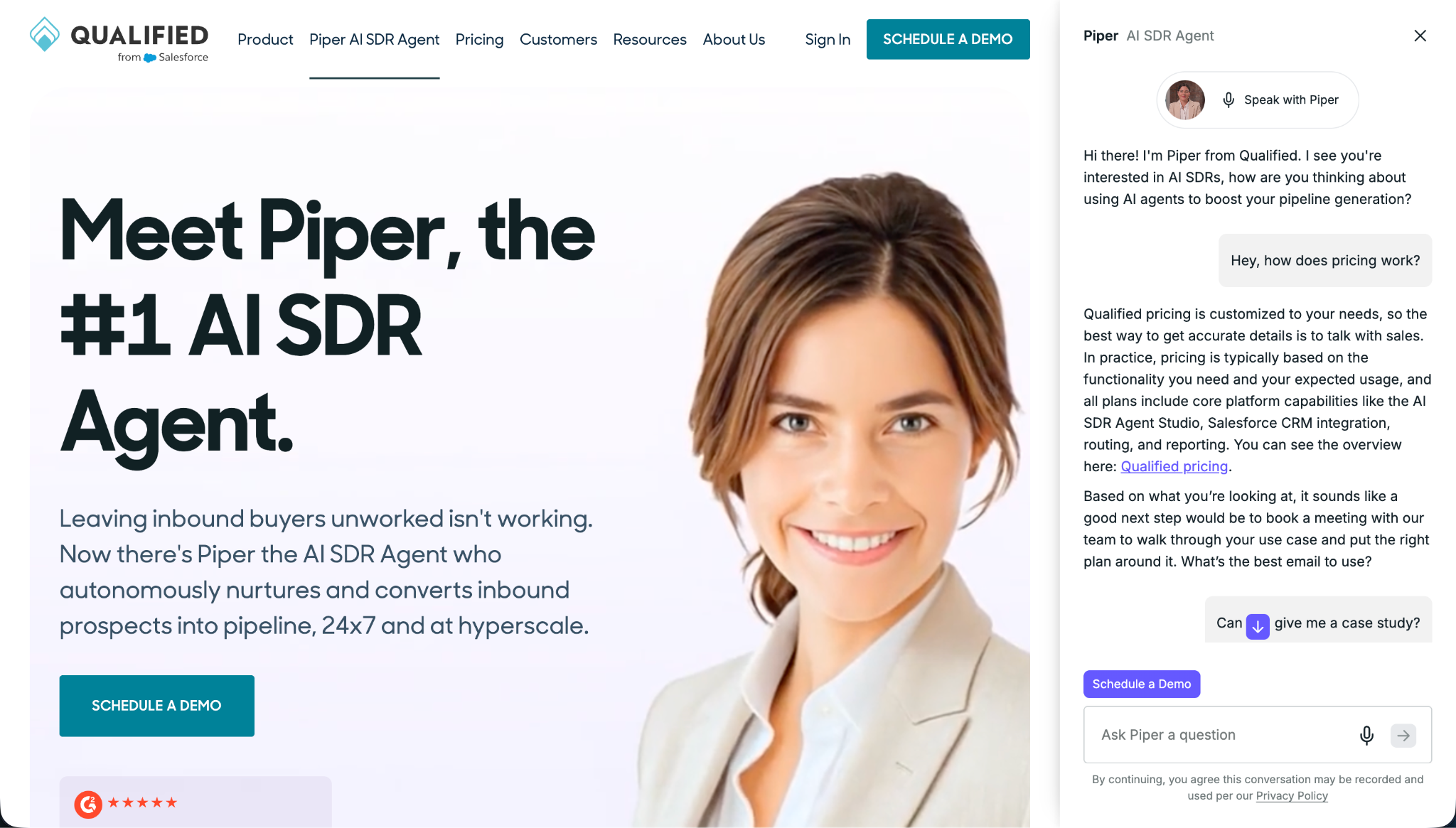
My personal opinion: Piper has a clean UI and, for the most part, runs pretty seamlessly. I especially like that the chat modal isn’t intrusive to the rest of my browsing experience, it sits on the right side of the screen. That being said, I think the experience falters when it comes to showing off the actual product (no interactive demos, product walkthrough videos, etc) which is quite a bummer. To me, the whole point of an inbound SDR is self-guided product discovery and qualification.
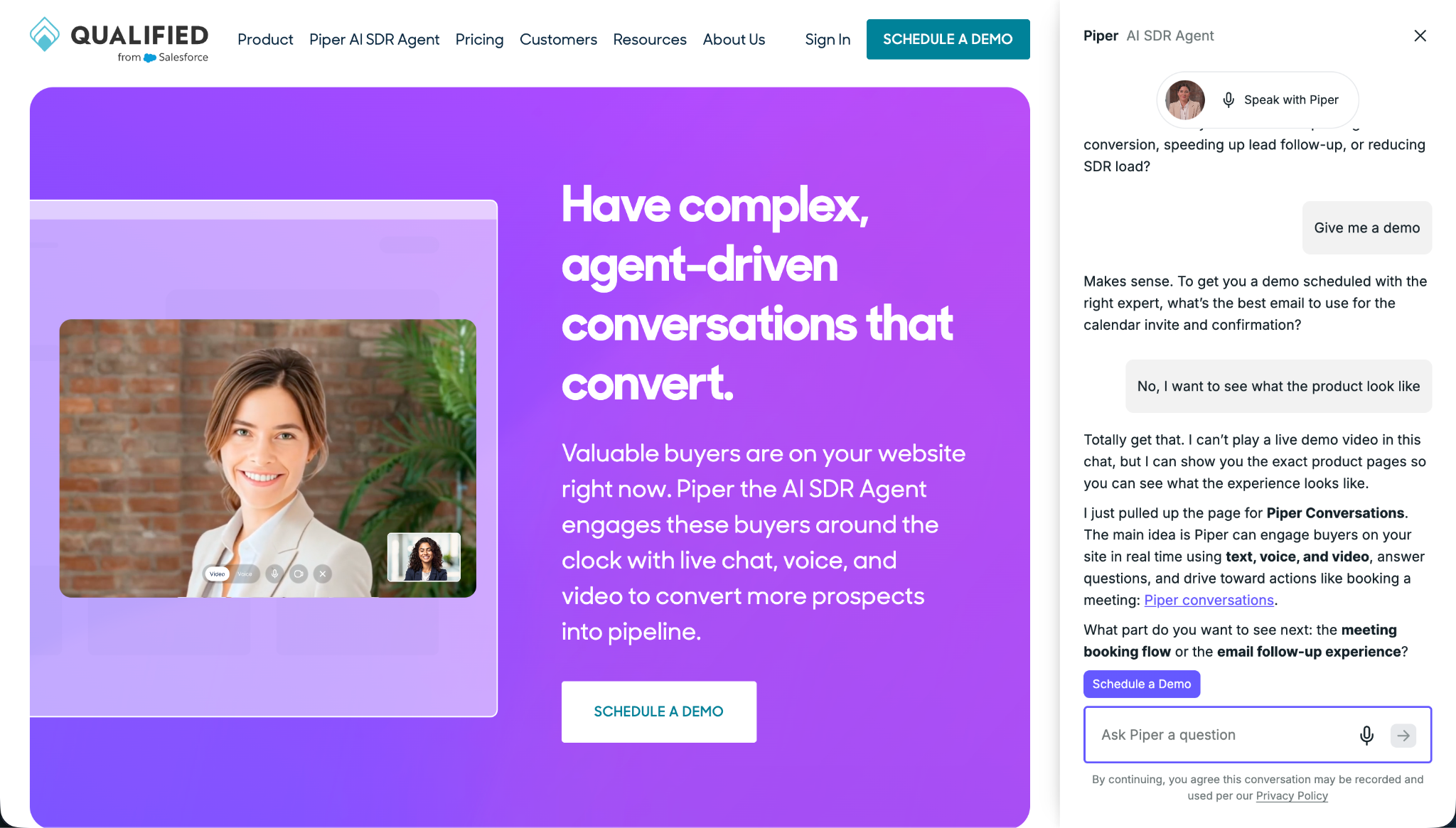
The tradeoff is the pricing and implementation commitment. At roughly $42K per year with enterprise-scale onboarding, Qualified is a serious investment. For teams outside the Salesforce ecosystem, or teams that need to get an inbound AI SDR live quickly at lower cost, RepX is the more accessible starting point.
Best for: Enterprise B2B teams where Salesforce is the center of their revenue operations and real-time CRM signal integration is a requirement.
3. 1Mind (Mindy): enterprise inbound AI SDR with a video-native persona
1Mind’s Mindy is a video-native AI agent with a lifelike human avatar that engages website visitors in real-time video conversations. The positioning is a "Superhuman" closer that can hold an enterprise-quality discovery conversation without the latency or inconsistency of a human rep.
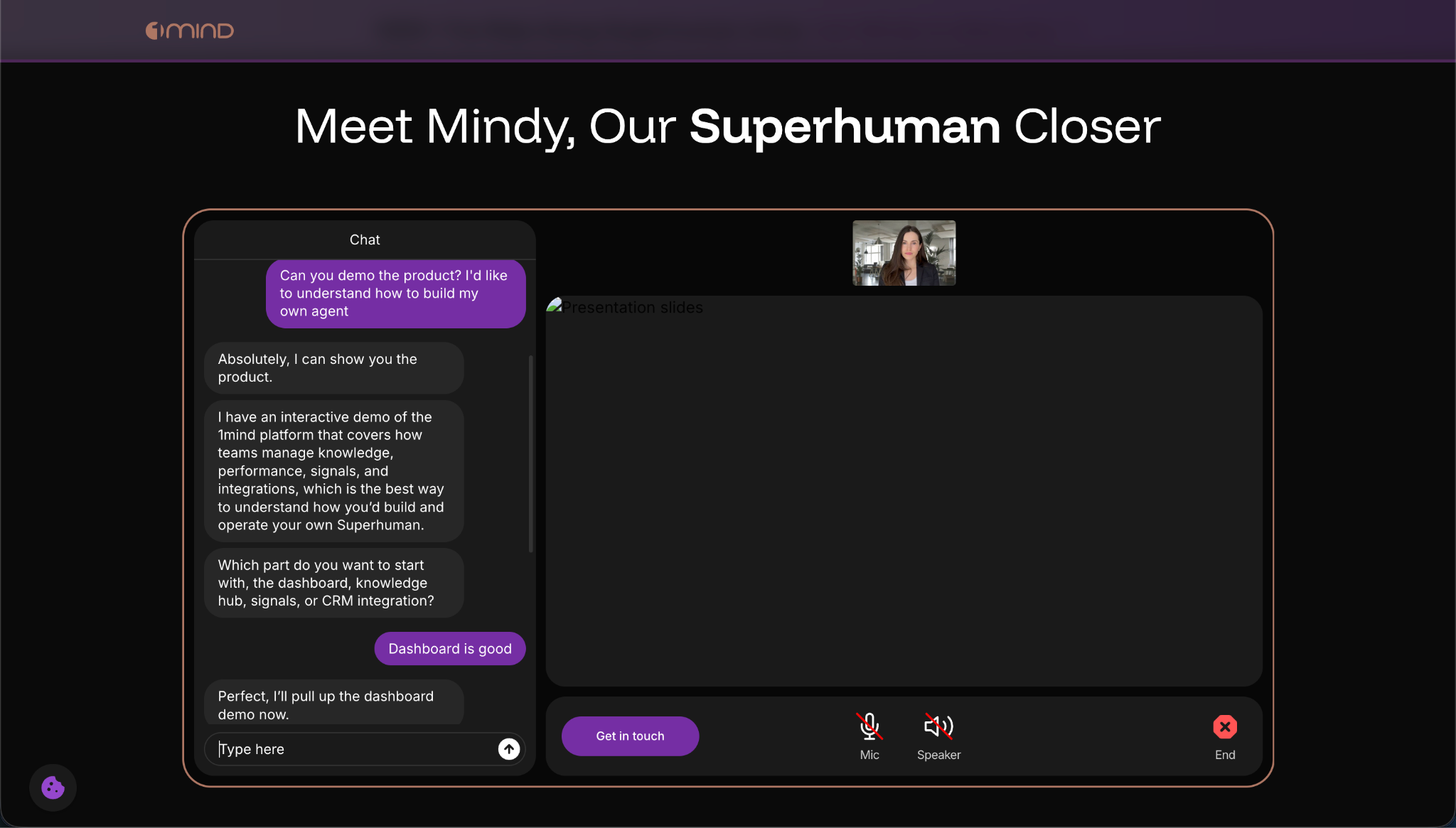
My personal opinion: For how much Mindy/1Mind reportedly costs, I have to say: I was disappointed with the experience. Have a look at the screenshot above, even after repeated attempts, Mindy failed to pull up functioning assets. But maybe (hopefully) this is a one-off issue. Given the logos 1Mind works with, I’m sure their product does work reliably for the most part.
Overall, with 1Mind, the differentiator is the “realism” and “presence” of the interaction. For companies selling complex, high-ACV products where trust and perceived competence in the early conversation matter, a video-native AI agent can cover more discovery ground in the first touchpoint than a text chat or voice-only approach (but only when it works).
Pricing is custom and enterprise-only, with reported contracts in the six-figure range annually. G2 shows a 4.9 rating, though the review count is small and worth verifying before using that figure in any formal evaluation.
Honest tradeoff: 1Mind is not an accessible mid-market option. The price point, deployment timeline of one to two months, and the enterprise-first motion mean it is a fit for a specific profile: large organizations with sufficient inbound traffic, a high-ACV product, and the budget and internal capacity to implement a custom AI agent properly.
Best for: Enterprise teams with a high-ACV product, meaningful inbound traffic, and the budget for a six-figure annual AI sales agent contract.
Outbound AI SDR tools
4. AiSDR: best outbound AI SDR for transparent, multichannel prospecting
If you want multichannel outbound without seat-based pricing surprises, AiSDR delivers email and LinkedIn sequences for a flat $900/mo. Its G2 score of 4.7 stars is notably strong relative to its review count (76 reviews), which suggests real customer satisfaction rather than a review volume campaign.
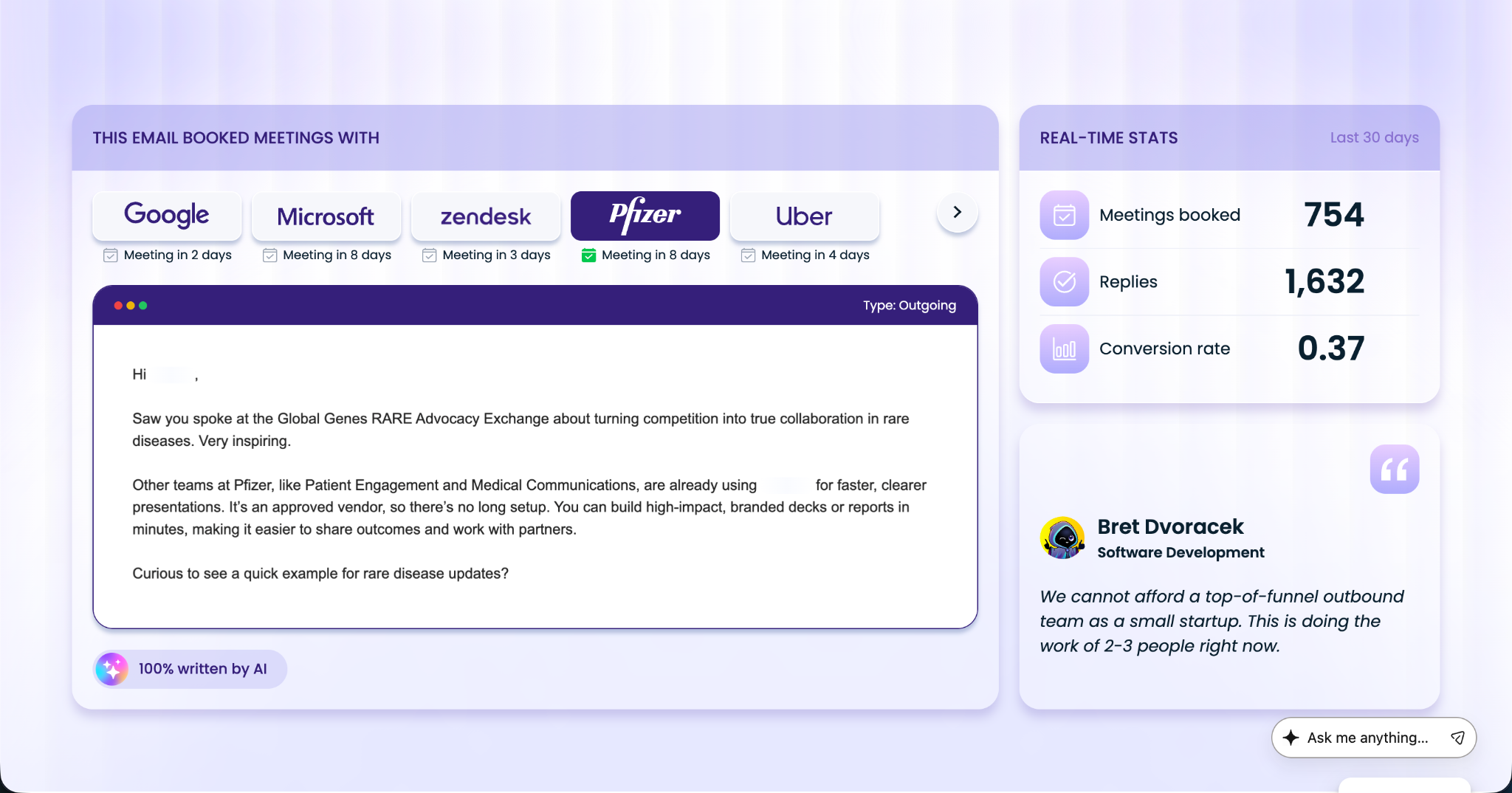
One G2 reviewer noted: "The ability to run personalized outbound across email and LinkedIn from a single dashboard, without per-seat charges, made this the easiest AI SDR to justify internally."
The limitation that surfaces in reviews: the personalization logic works well on tightly defined ICPs with clean lists, but produces less sharp output on complex enterprise accounts with nuanced messaging needs. It performs best when the targeting work has been done upstream (ideally with a data tool like Clay).
Best for: Outbound teams that want multichannel AI SDR capabilities with straightforward, predictable monthly pricing.
5. Salesforge (Frank): best for outbound email deliverability
If your outbound emails are landing in spam instead of inboxes, Salesforge's AI agent Frank is built specifically for that problem. Most outbound AI SDR tools optimize for sequence length and personalization depth. Salesforge optimizes for inbox placement, which has become an increasingly consequential variable as spam filters have tightened and buyer email fatigue has compounded across the market. According to recent AI SDR adoption data, email deliverability is now the number-one concern for outbound teams evaluating AI tools.
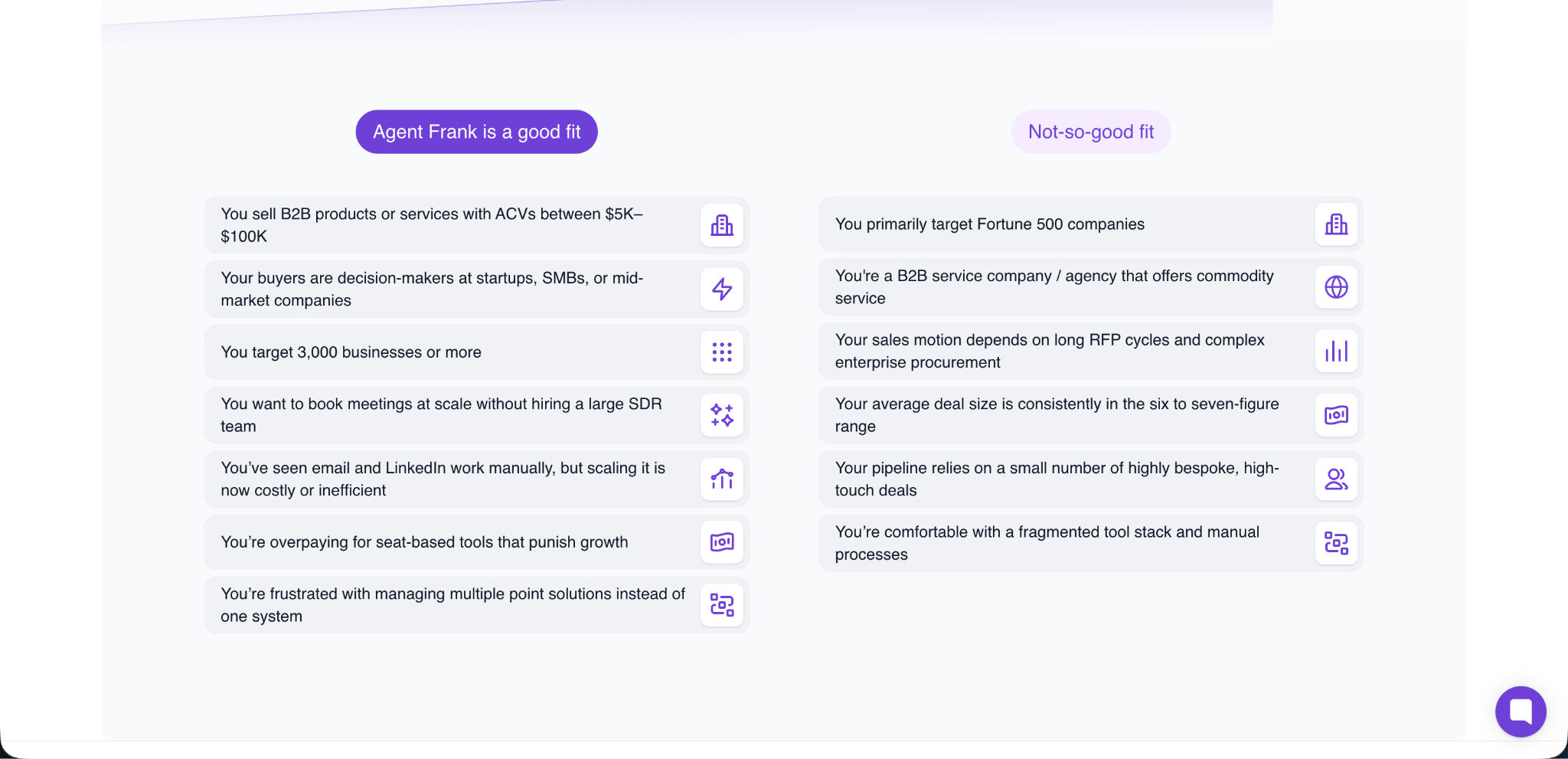
At $599/mo, it is the most accessible full-featured outbound option on this list. The email focus means it is not the right choice for teams that need LinkedIn outreach or voice capabilities included in the same platform.
A Salesforge user on G2 summarized the core value: "We switched to Frank specifically because our reply rates doubled once deliverability improved. The AI personalization is solid, but the inbox placement is the real reason we stayed."
Best for: Outbound teams where email deliverability is the primary constraint, not outreach volume.
6. Artisan (Ava): all-in-one outbound with built-in prospecting data
Artisan's AI agent Ava attempts to consolidate prospect data, personalization, and multichannel sequencing into a single platform. The core pitch is that you do not need a separate data provider if Ava covers both database access and outreach automation.
The G2 score of 3.9 stars from 22 reviews is the lowest on this list, and it is worth taking seriously. The reviews reflect visible rough edges, particularly around data quality for specific verticals and consistency of AI-generated personalization. The product has an ambitious vision that the execution is still working to catch up with. It is worth revisiting in 12 months.
Best for: Outbound teams comfortable being early adopters who want a single consolidated platform and are willing to trade some reliability for the convenience of an integrated database.
7. 11x.ai (Alice): enterprise multichannel outbound with voice
11x.ai's Alice is the enterprise option at the high end of the outbound AI SDR category. Where tools like AiSDR and Salesforge are optimized for accessible pricing and fast deployment, Alice is designed for high-volume enterprise outbound that includes voice as a channel alongside email and LinkedIn.

My personal opinion: Uncanny valley…
Starting at roughly $5K+/mo, it is priced for enterprise budgets and implements at enterprise timelines. For teams running outbound at serious scale who need a voice component in the motion, Alice is worth the evaluation. For smaller teams or those without a mature outbound motion to augment, the cost is hard to justify.
Best for: Enterprise teams running high-volume multichannel outbound where voice calls are part of the outreach strategy.
Data and enrichment tools that power AI SDR workflows
8. Clay: the enrichment layer behind sharper outbound sequences
If your outbound sequences are underperforming, the problem is often the quality of the list they run on. Clay solves that by pulling from 50-plus data sources to build enriched prospect lists, then using AI models to generate research summaries and personalized messaging drafts before any sequence runs. It is not a pure AI SDR tool in the way the platforms above are; it is the data infrastructure layer that makes those tools sharper.
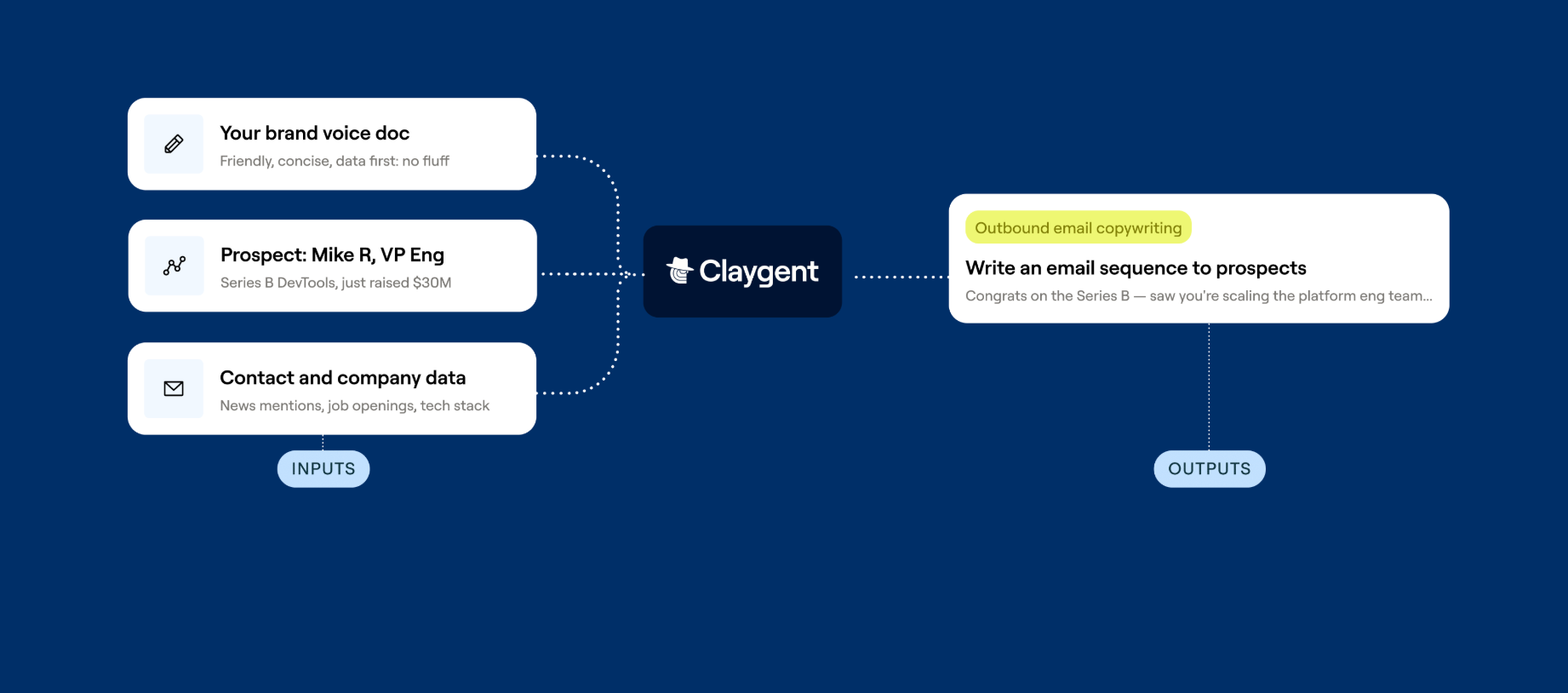
The teams getting the most value from Clay are running it as the data infrastructure layer that makes their outbound AI SDR sequences sharper, not as a direct replacement for those sequences. It makes AiSDR or Salesforge more effective by improving the quality of the inputs those tools work from.
Best for: RevOps and sales ops teams building the enrichment infrastructure that powers higher-quality AI SDR outbound.
9. Apollo.io: combined data, sequencing, and outreach in one platform
Apollo has been around the block. It’s a classic SaaS tool that offers prospect data, email sequencing, and AI-assisted outreach in a single platform, eliminating the need to stitch together three separate vendors. With 4.8 stars across 7,000+ G2 reviews, it is the most widely adopted tool in the combined data-plus-outreach category. The AI-native features have expanded substantially in the past couple of years, including intent signals, AI-written email suggestions, and buying committee identification.
The honest tradeoff: Apollo tries to do everything, and specialists in narrow categories still outperform it in those categories. The data is strong. The sequencing is solid. The AI SDR autonomous engagement features are improving but are not yet at the level of platforms built specifically for AI-driven outreach.
Best for: B2B teams that want a single platform covering prospecting data, email sequencing, and AI-assisted outreach without managing multiple vendors.
How to choose the right AI SDR tool in 2026
The decision tree is more straightforward than most evaluation guides suggest. The first cut is diagnosing whether your constraint is inbound conversion or outbound pipeline generation.
If your constraint is inbound: RepX, Qualified, and 1Mind are the three serious options. RepX deploys in under a week and starts at $2,000/mo, making it the fastest path to live. Qualified requires enterprise onboarding and starts at $42K/yr, with the deepest Salesforce integration. 1Mind is the best fit when the ACV and deal complexity are high enough to justify a video-native AI persona and the enterprise price point that comes with it.
If your constraint is outbound: The choice depends on channel mix (email only versus multichannel versus voice), pricing model, and whether data enrichment is handled upstream or needs to be bundled in.
A few things worth verifying before signing any contract in this category:
- Ask how the AI was trained on your specific product and ICP. Generic tools that have not been trained on your documentation, positioning, and customer language will consistently underperform tools that have.
- Check CRM integration depth. A tool that does not push clean, structured conversation data to your CRM creates a downstream data problem that compounds over time.
- Talk to an existing customer in your segment who has been using the tool for at least six months.
For a broader look at the best SDR tools category (including non-AI options), we have a separate roundup.
The AI SDR market is still moving quickly. Gartner's 2026 analysis confirms that the most durable tools are solving specific, well-defined problems rather than trying to cover the entire SDR workflow. That pattern tends to hold in most software markets, and this one is not an exception.
FAQ: AI SDR tools in 2026
1. What are the best AI SDR tools in 2026?
The top AI SDR tools in 2026 depend on your use case. For inbound qualification, RepX by Storylane and Qualified (Piper) lead the category. For outbound prospecting, AiSDR, Salesforge, Artisan, and 11x.ai each specialize in different outbound motions. Clay and Apollo.io are the strongest options for the data enrichment layer that feeds outbound sequences.
2. What is the difference between inbound and outbound AI SDR tools?
Outbound AI SDR tools automate cold prospecting: they research target accounts, personalize messaging, and run multichannel sequences to generate new pipeline from scratch. Inbound AI SDR tools qualify and engage visitors who are already on your website, answering product questions, surfacing demos, and routing qualified leads to sales in real time. The two categories solve fundamentally different pipeline problems.
3. Which AI SDR tool should I use in 2026?
Start by diagnosing where your pipeline is breaking. If you have website traffic that is not converting, evaluate inbound tools like RepX (for demo-led qualification) or Qualified (for Salesforce-native enterprises). If you need to build cold pipeline, evaluate outbound tools based on your channel needs and budget. If your data quality is the bottleneck, start with Clay or Apollo.io before layering on outbound automation.
4. What is the best inbound AI SDR tool in 2026?
RepX by Storylane combines real-time visitor qualification with interactive product demos in the same session, a capability we did not find in other inbound AI SDRs on G2 as of Q2 2026. Qualified (Piper) is the leading alternative for enterprise teams with deep Salesforce requirements. RepX starts at $1,500/mo and deploys in under a week; Qualified starts at approximately $42K/yr.
5. How much do AI SDR tools cost?
AI SDR tool pricing ranges from free tiers (Apollo.io, Clay) to $5K+/mo for enterprise platforms like 11x.ai. Mid-market options include AiSDR ($900/mo), Salesforge ($599/mo), and RepX ($1,500/mo). Pricing models vary between flat monthly rates, per-seat charges, and usage-based tiers, so compare total cost of ownership rather than headline prices alone.