This interactive demo was created free with Storylane in 2 minutes. Create your own demo
Start free
All Tutorials /Gitlab

How to Push to GitLab

Updated on:
June 5, 2026
By:
Madhav Bhandari
Use this interactive demo to learn how to push local files to a GitLab remote repository.

Quick summary

This demo walks you through the complete process of pushing files to GitLab using Git Bash, covering everything from initializing a repository to executing the final git push command. Each step is shown interactively so developers can follow along and replicate the workflow in their own local environment.


Steps

  1. Open Git Bash by locating the files in your local repository, right-clicking, and selecting "Open Git Bash Here."
  2. Run git init in the terminal to initialize Git in your project folder.
  3. Run git status to check for untracked files that you want to push to the remote repository.
  4. Copy and paste the Git global setup commands into your command prompt to configure the author's name and email for your repository.
  5. Use git add <file-name> in Git Bash to stage all files for commit in your remote repository.
  6. Enter git commit -m "<your commit message>" to commit the staged files to your repository.
  7. Run the push command to send your changes to the chosen remote repository.
  8. Execute git push -u origin master by copying the command from your Git command instruction lines to complete the push.
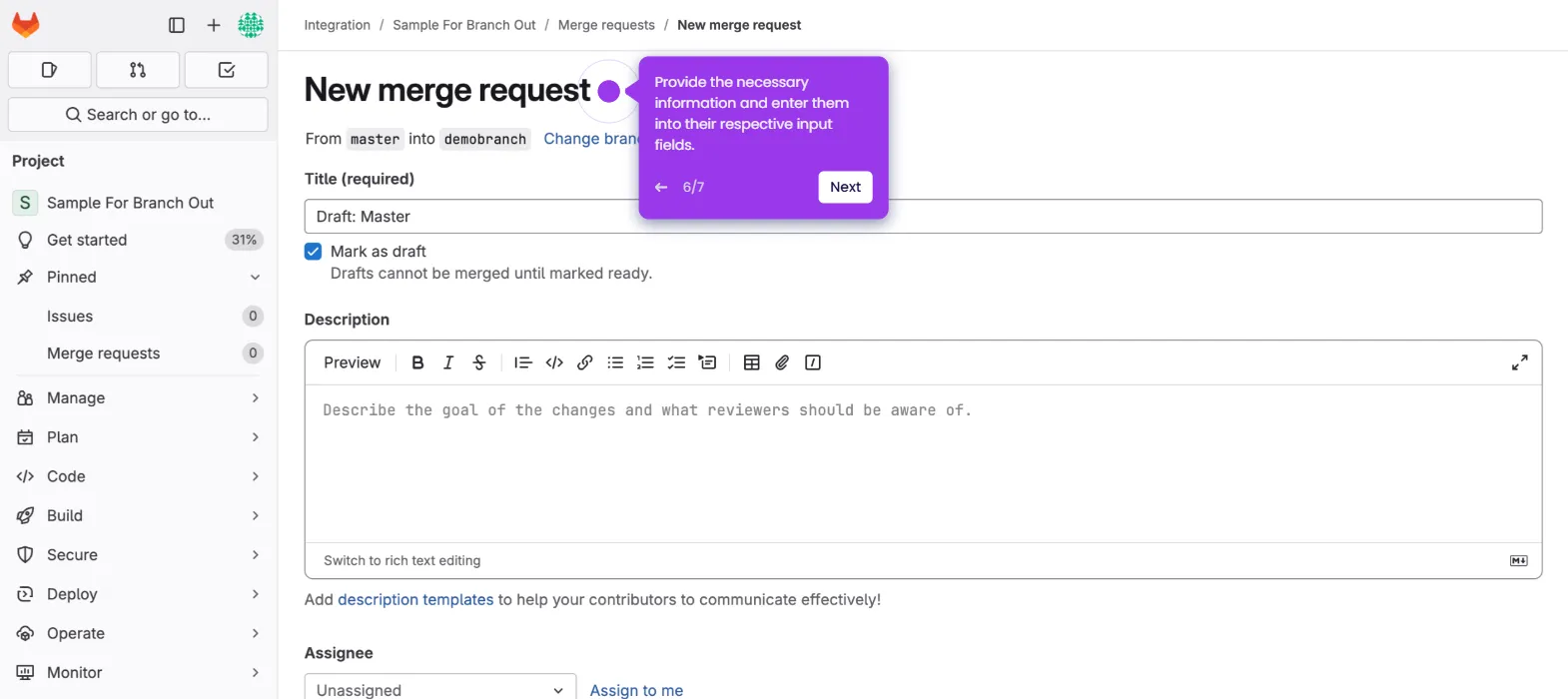
  9. Enter your GitLab username and password when prompted to authenticate.
  10. Confirm that the file has been successfully pushed from your local repository to your remote GitLab repository.
📌 Why this matters

Knowing how to push code to GitLab is a foundational skill for any developer working with version control and collaborative software development. Pushing local commits to a remote GitLab repository ensures your work is backed up, shareable, and integrated into team workflows via merge requests and CI/CD pipelines. Mastering commands like git init, git add, git commit, and git push -u origin master gives developers full control over their source code management process. This workflow is essential for open-source contributors, enterprise development teams, and anyone adopting Git-based DevOps practices.
Your product deserves an interactive demo
Start free
Similar Articles
Gitlab

How to Integrate Replit with GitLab

Madhav Bhandari
Director of Marketing @ Storylane
Gitlab

How to Create a Pull Request in GitLab

Madhav Bhandari
Director of Marketing @ Storylane
Gitlab

How to Integrate Snyk with GitLab

Madhav Bhandari
Director of Marketing @ Storylane
No items found.
Platform
Interactive Demos
Sandbox Demos
Hubs
RepX
Integrations
Solutions
Product Marketers
Growth & Demand Gen
Sales Reps & AEs
Presales & SEs
Customer Success
Product Managers
Customers
Demo Showcase
Customer Stories
Finer Demos Club
Features
Demo Signals
Personalization
Deal Intelligence
Resources
Blog
The Plot
Tutorials
Help Docs
What’s New
Demo Dundies
Company
Careers
Pricing
Partners
Contact
Trust Center
Backed by
Chrome Extension Icon
Chrome extension
Download
Desktop app
Download
Built in San Francisco Bay Area - ©2026 Storylane
Privacy PolicyTerms & Conditions
X Corp (formerly Twitter)LinkedIn
This website uses cookies to ensure you get the best experience on our website. Learn More
Got it
This website uses cookies to ensure you get the best experience on our website. Learn More
Got it